01
Complete dentures
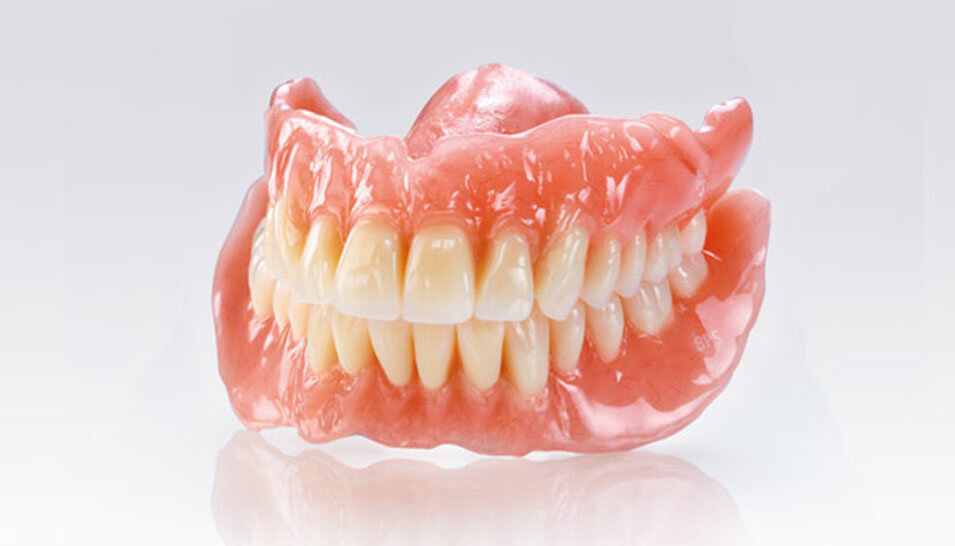
A complete denture comes down to three things: base extension over the supporting surfaces, tooth arrangement within the neutral zone, and balanced occlusion.
Complete dentures, titanium, chrome cobalt and Flexite partials, and immediate dentures. The removable range is carried by Laboratoire Dentaire Concorde Canada, our specialist division, at the same Laval address.
View Concorde's products A complete denture comes down to three things: base extension over the supporting surfaces, tooth arrangement within the neutral zone, and balanced occlusion.
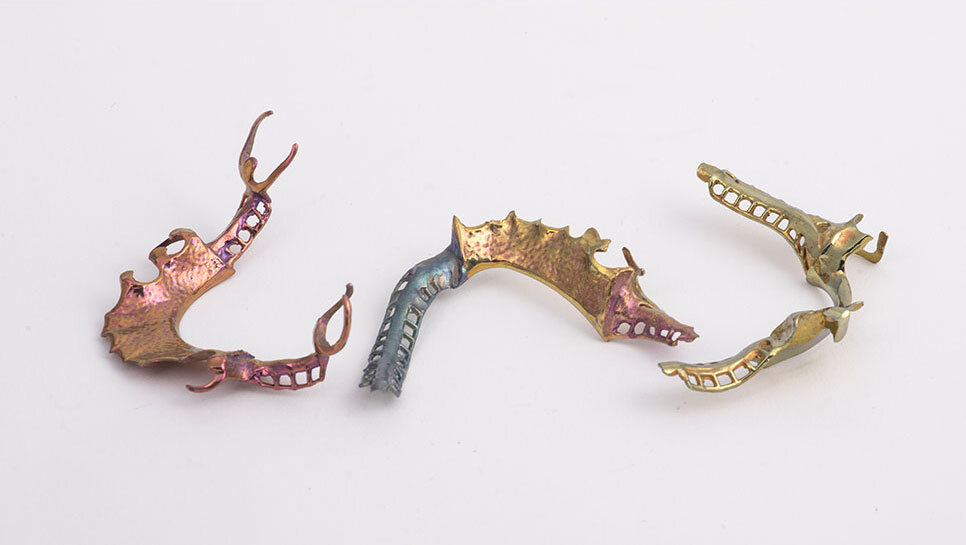
The metal framework makes the whole difference on a partial intended for the long term: it is thinner, stiffer and more stable over time than the resin equivalent, and it lets load be carried by the teeth rather than by the ridge alone.
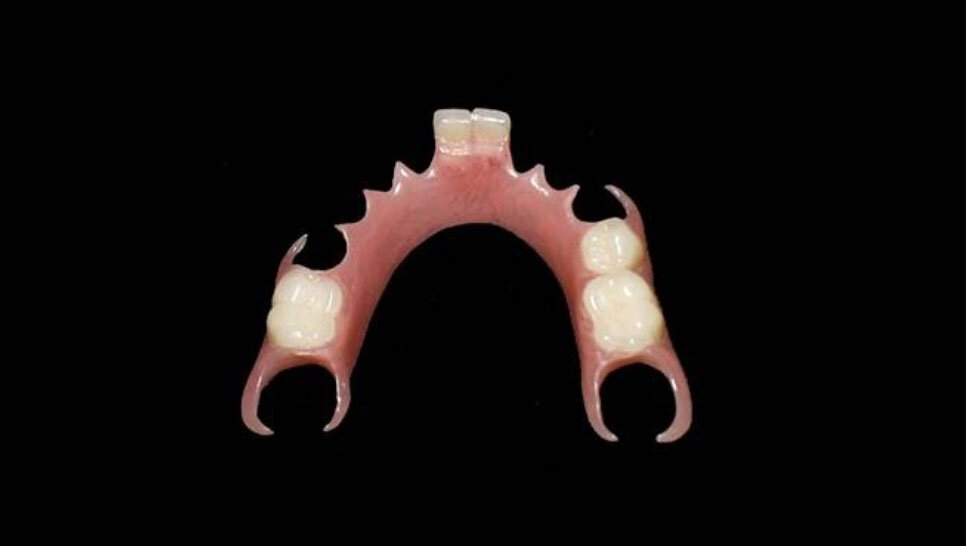
The Flexite partial removes visible metal clasps: the clasps are formed in the same translucent pink material as the base and blend into the gingiva.
The immediate denture is fabricated before the extractions and inserted the same day, so your patient is never edentulous.
A denture does not need replacing every time it moves.
Biocompatible and very light, indicated in patients sensitive to alloys. Details on the Concorde site.
View at Concorde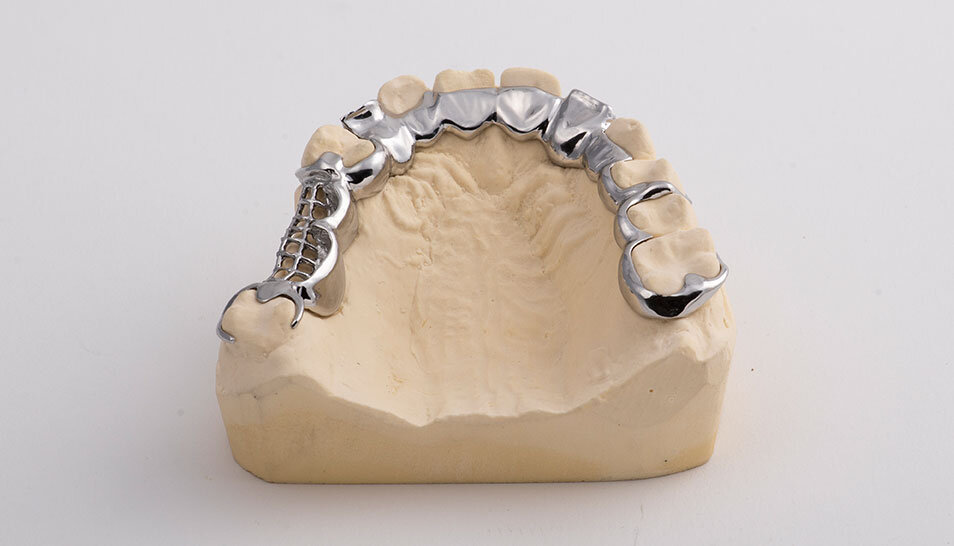
The hygienic partial, in titanium, slimmer and more discreet than the conventional cast partial.
View at Concorde
Flexible, translucent and free of visible metal clasps, for short-span spaces.
View at Concorde
Pressure-cured resin base, set-up validated at the wax try-in.
View at ConcordeOn a complete denture, the wax try-in is the last stage where everything is still modifiable. We recommend you do not skip it.
They are two divisions of one laboratory, at the same Laval address, answering two distinct kinds of market demand. AIDE is the implantology division: guided surgery, photogrammetry, fixed and implant-retained prosthetics. Concorde is the non-implant removable division, home to complete dentures, cast partials and Flexite. You prescribe to the same place, whatever the nature of the case.
Chrome cobalt remains the reference for rigidity, and it allows thinner connectors at equal strength. Titanium is the answer for a patient sensitive to nickel or cobalt-bearing alloys, and it offers a lightness wearers notice immediately. On a large maxillary framework the perceived weight difference is real.
On a short-span space, in a patient who flatly refuses a visible clasp, or when a marked undercut prevents a rigid framework from seating. Elsewhere the cast partial is superior: stiffer, easier to reline and repair, and more protective of the ridge. We will tell you when the case does not suit a flexible.
At least one in the first months, often two during the first year, because resorption is fastest right after the extractions. Tell your patient at treatment planning: an immediate denture is designed to follow a ridge that changes, and the reline is part of the protocol rather than a correction of a mistake.
Yes. We digitise the denture in place, record the set-up and the base extension, and produce a copy or a spare. That is particularly useful in an older patient well adapted to their denture, for whom a fresh set-up would be technically better but functionally less well tolerated.
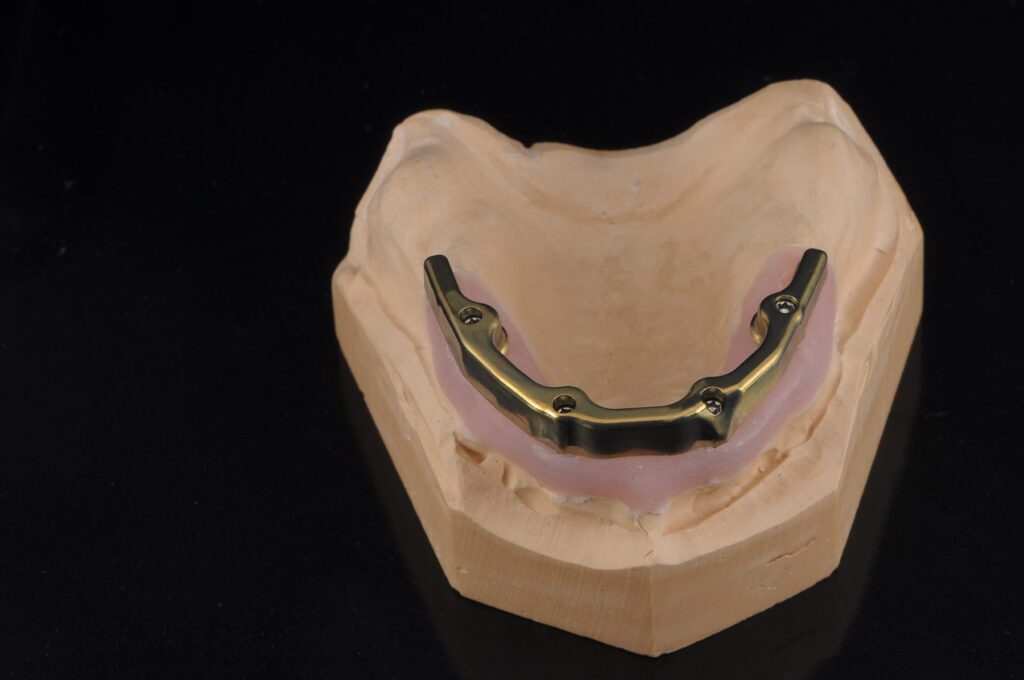
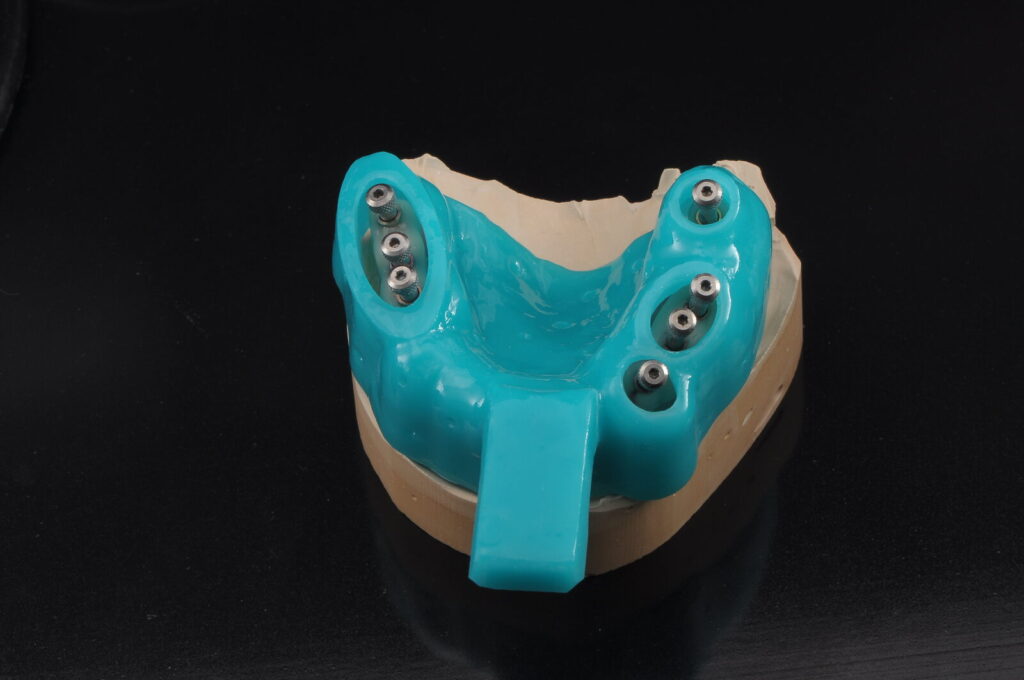
A functional impression on a tray with a calibrated spacer.
View the product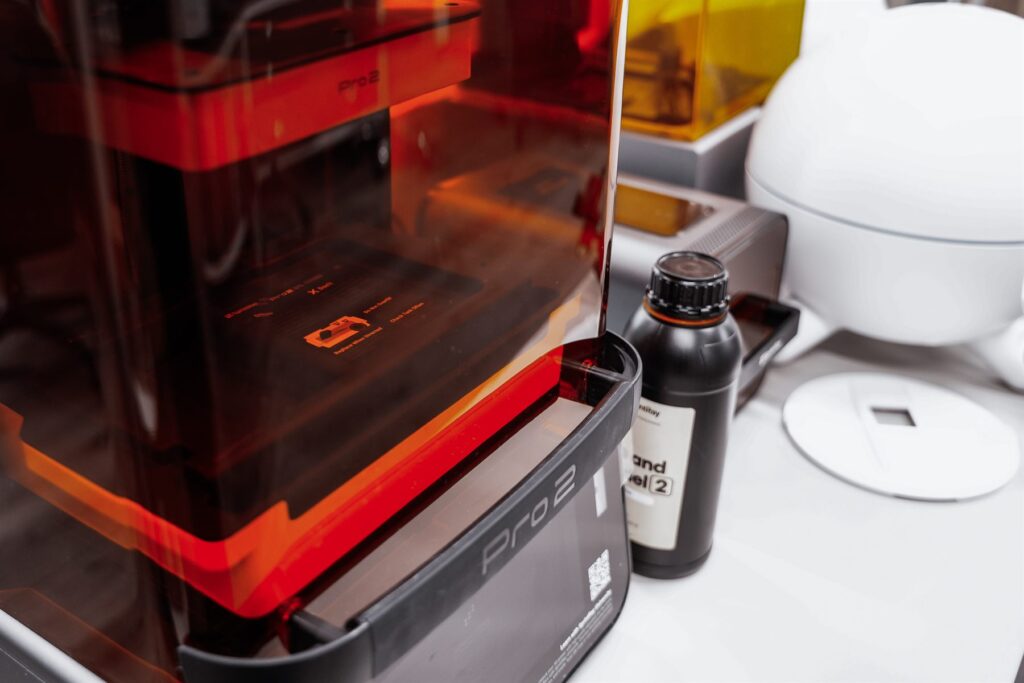
The printed interim that holds the space before the partial or the definitive crown.
View the productCall before the definitive impression. On a complex case, five minutes of discussion saves a remake appointment.