01
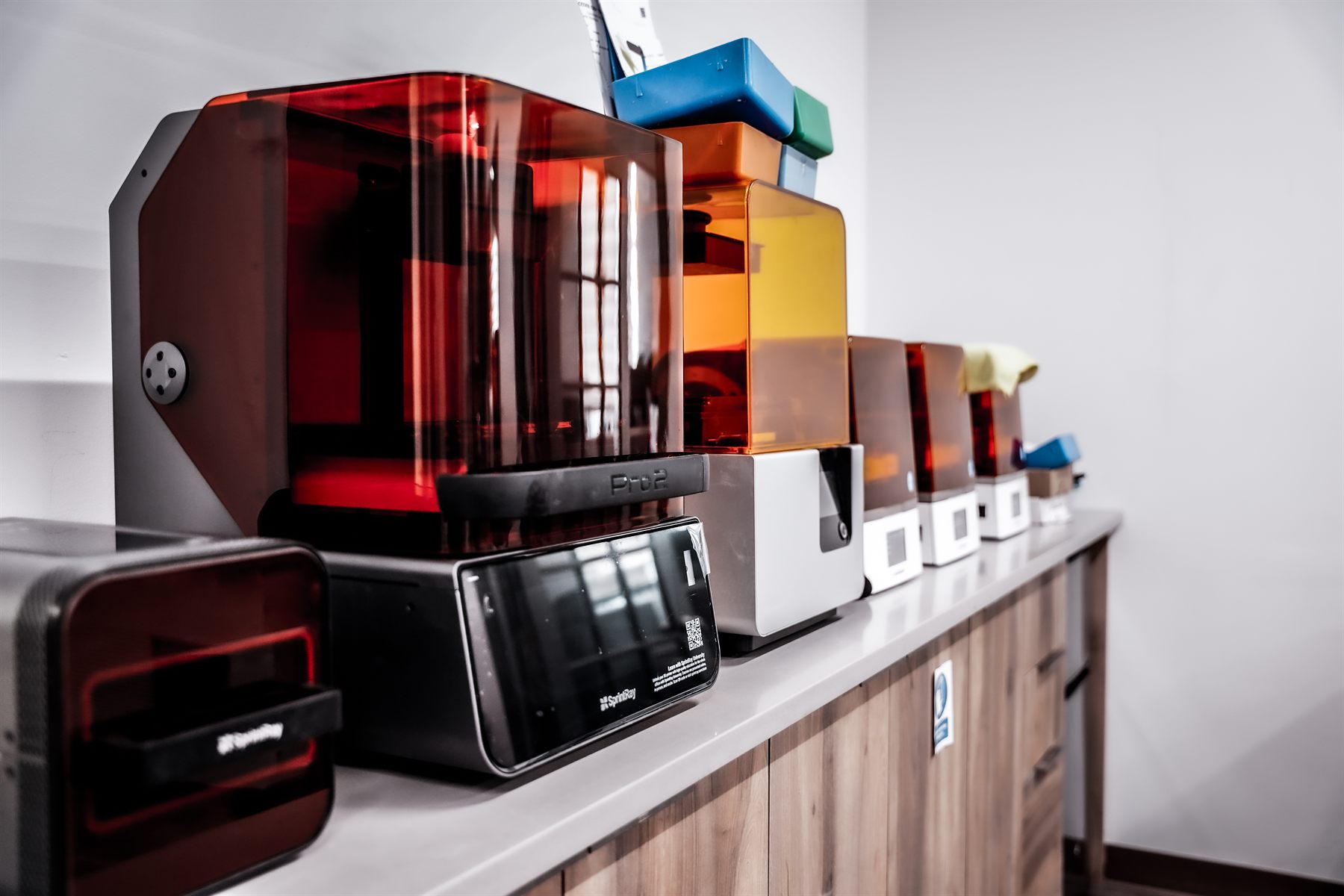
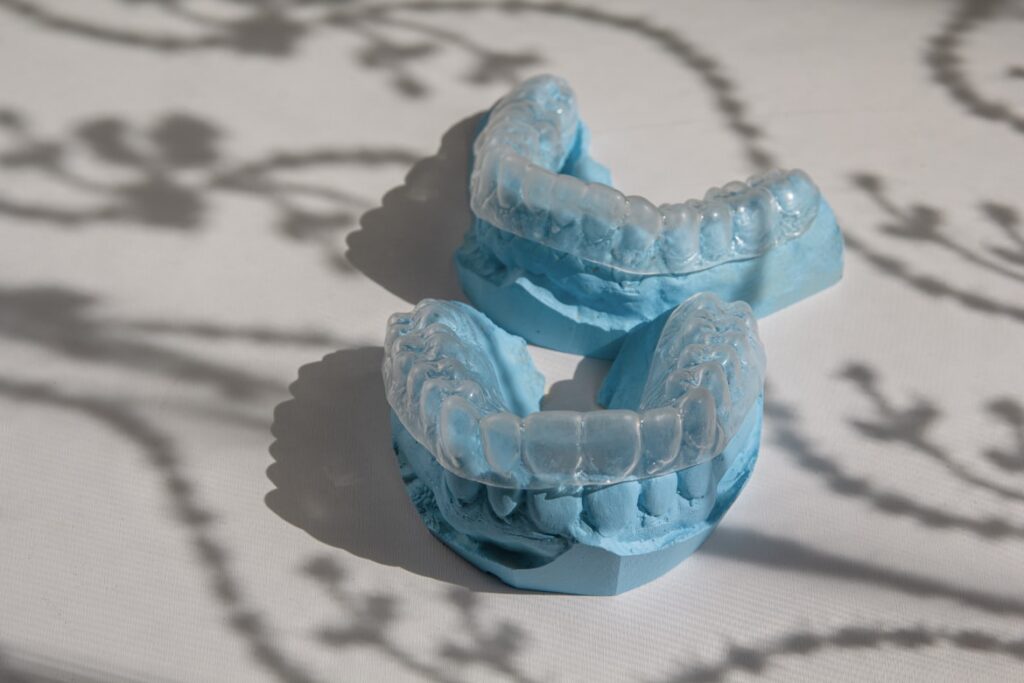
Occlusal splints in printed thermoplastic, designed and mounted on the occlusion you recorded.
Even posterior contacts and anterior guidance drawn in, not left to chance at mounting.
Interocclusal height set by the indication and the record supplied.
Grip set for hand insertion, without binding and without play.
Full polish, intaglio included, for comfort and hygiene.
File archived, so an identical second splint is immediate.
The points to check chairside at delivery are listed.
Without an interocclusal record at the intended height, an occlusal splint cannot be mounted correctly. We tell you before producing it, not after.
An interocclusal record taken at the opening height you want for the splint, in centric relation for a stabilisation splint. The scan of both arches alone is not enough: it would give us maximum intercuspation, which is often precisely the position the splint is meant to change.
Maxillary by default: coverage is more stable, anterior guidance easier to draw and retention better. Mandibular is justified when the patient tolerates a maxillary splint poorly, when there is a marked gag reflex, or for less visible daytime wear. State your choice and we follow the prescription.
Yes, and it is normal. We deliver the splint with a note of the points to check, but final adjustment happens in the mouth with articulating paper: no record, however careful, replaces verification in situ. Plan the delivery appointment accordingly.
The file is kept. An identical splint is reprinted with no new impression and no new record, as long as the dentition has not changed. If the fracture recurs in the same place, send us the broken piece: that usually points to an over-concentrated contact, which is corrected at the design stage.
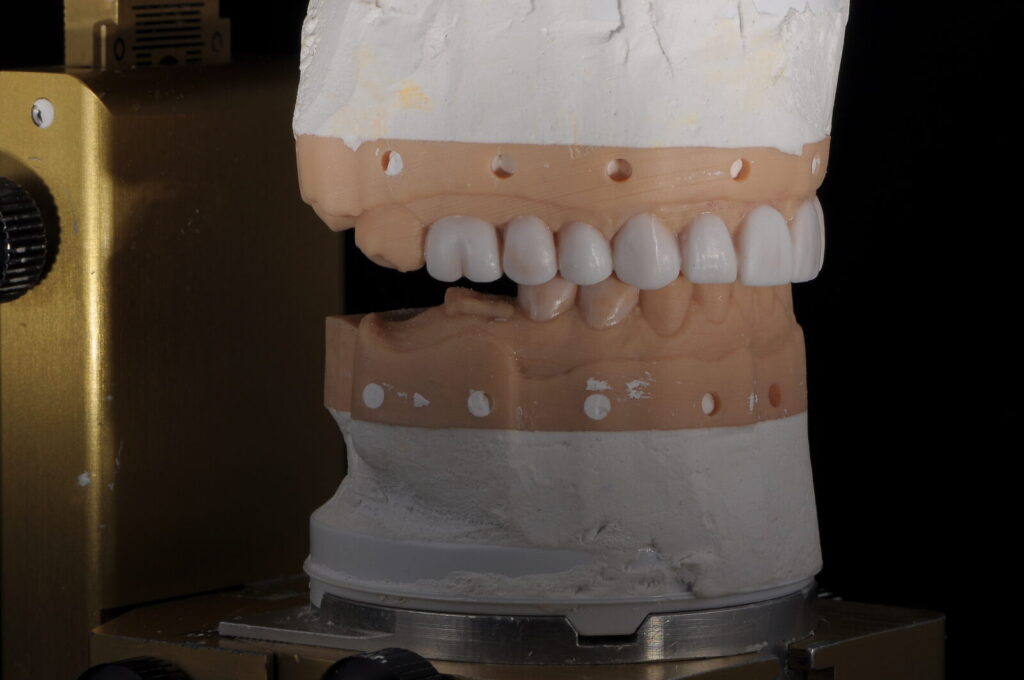
When the splint precedes an occlusal reorganisation, the project is drawn first.
View the productSend the scan of both arches and the interocclusal record. We confirm the best-suited design.