01
From digital project to guided preparation
Everything starts with your photographs and your scan.
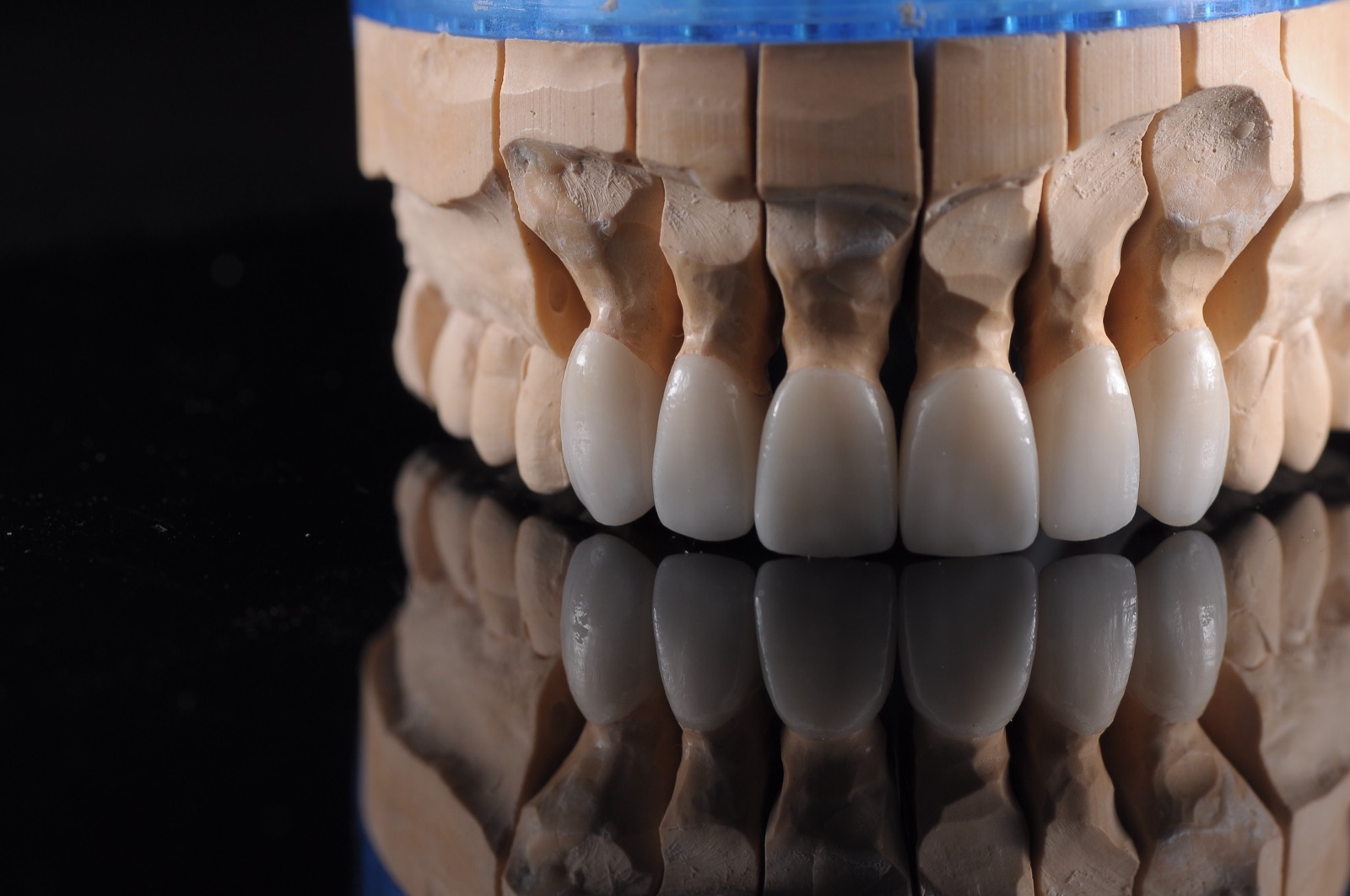
Veneers in lithium disilicate, layered feldspathic ceramic and ultra-translucent zirconia, from 0.3 mm thick, designed from an esthetic project validated in the mouth.
Digital wax-up aligned to the photographs and, where useful, to the facial scan.
Resin shell reproducing the project, tried in the mouth before any preparation.
Silicone guide that controls reduction thickness tooth by tooth.
Layering or staining done by the ceramist who saw the shade.
Available on extended anterior cases, on request.
Intaglio treatment sheet supplied with the pieces.
Everything starts with your photographs and your scan.
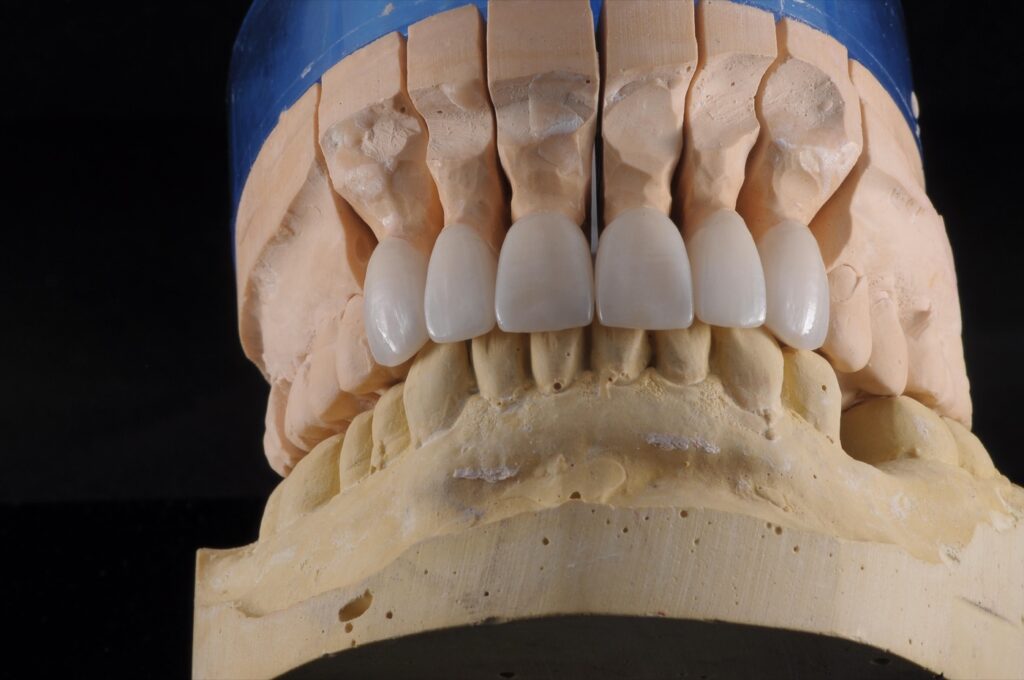
Pressed lithium disilicate remains our reference veneer material: it works from 0.3 mm on the facial surface, it bonds with hydrofluoric acid and silane, and its translucency is tuned by the choice of ingot.
When the tooth is broken down but the remaining walls are sound, the bonded partial restoration preserves more tissue than the full-coverage crown.
A veneer is a bonded piece: its longevity depends on an enamel intaglio across as much surface as possible, which is exactly what the preparation key is there to achieve.
Yes, when the starting situation allows it: slightly retruded teeth, microdontia, diastemas to close, no or minimal crowding. The mock-up settles the question better than any discussion. If it reveals excessive facial volume or an overcontoured emergence profile, minimal preparation becomes necessary and we tell you then.
Frontal smile with lips apart, retracted view of both arches in occlusion, retracted view of the maxillary arch alone, right and left profile, lips at rest, and a shade photograph with the Vita tab held in the same plane as the teeth. Without the shade tab photograph, characterisation is done blind.
We ask for the die shade recorded with a die shade guide, not just the target shade. Depending on the gap we increase ingot opacity, move to ultra-translucent zirconia, or recommend slightly greater thickness. A discoloured die masked with an over-translucent material always reads grey.
On an extended anterior case, yes: we deliver the veneers at bisque stage for a try-in with try-in paste. Form and shade corrections are then made before glazing. On a well-documented two or four unit case, that stage is usually unnecessary.
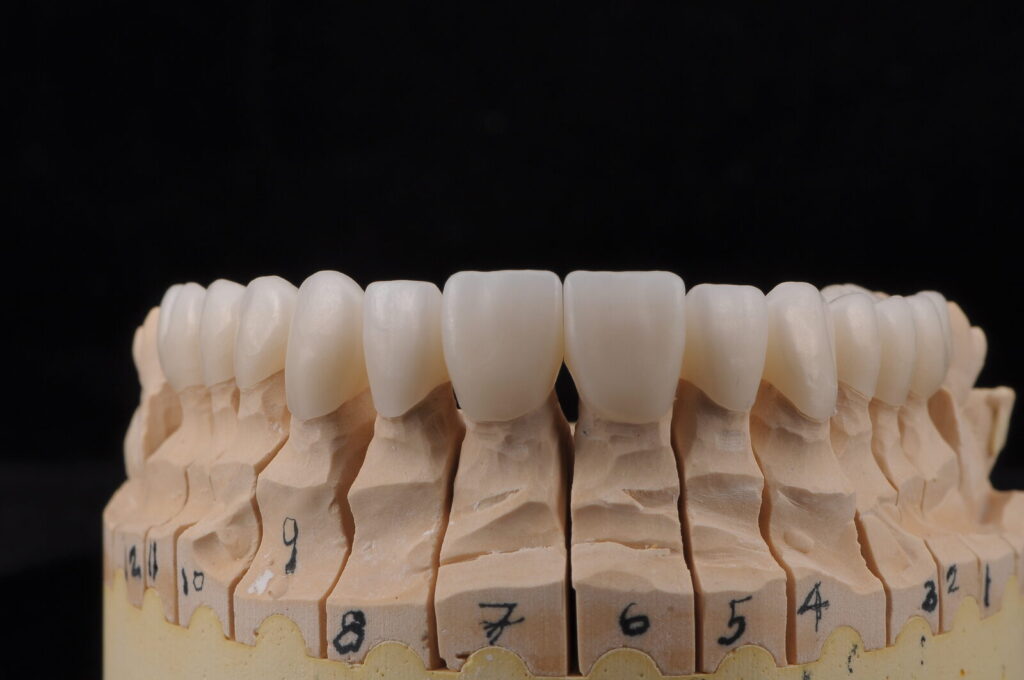
The pieces delivered with the intaglio etched and silanated on request, a sheet stating the treatment performed, and a numbered seating chart. We do not prescribe your cement: tell us the system you use and we adapt the surface treatment accordingly.
Facial analysis, digital wax-up and a mock-up validated before any fabrication.
View the service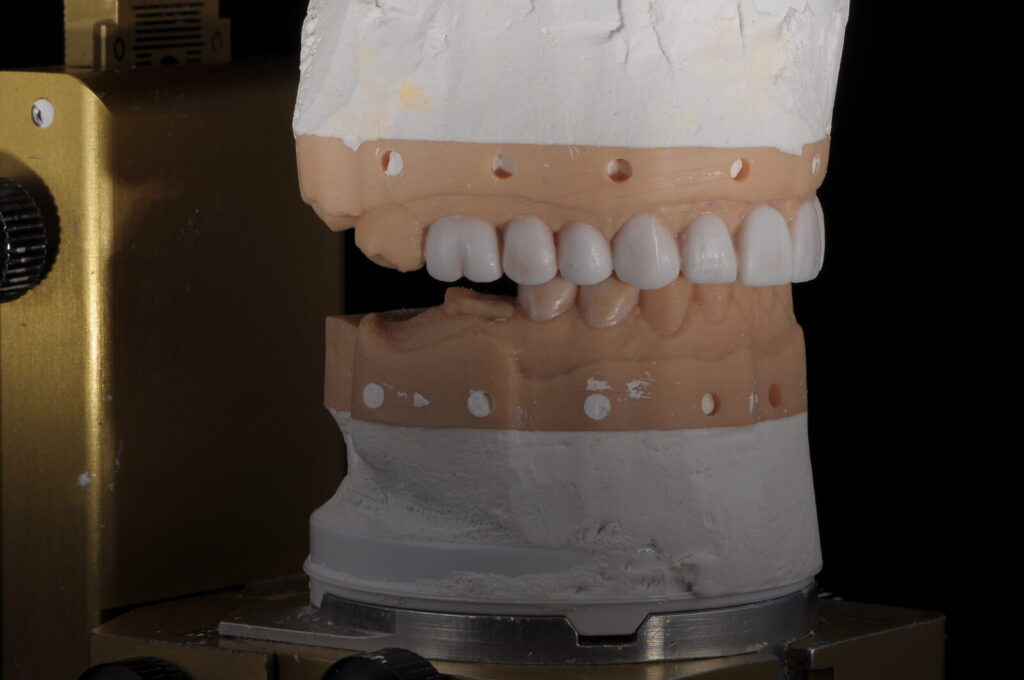
The project in wax or resin, with a silicone key and a mock-up shell.
View the product
Calibrated-lighting room, Vita guides, or our ceramist travelling to you.
View the serviceSend the scan and the photographic series. We produce the project and the mock-up before we talk about ceramic.